Why We Keep Repeating Unhelpful Patterns

Have you ever caught yourself doing something and thought, “Why am I doing this again? I literally know better.”
That moment can feel maddening. You know the reaction does not help. You know the habit costs you time, energy, sleep, connection, or confidence. You may even understand where it comes from. Yet when the right cue shows up, there you are again, reaching for your phone, shutting down, snapping back, procrastinating, overexplaining, people-pleasing, or abandoning the thing you said mattered.
The frustrating truth is that knowing you want to change something and being able to respond differently in the moment are two different skills. Insight helps, but insight alone does not erase an automatic pattern.
That does not mean you are broken, weak, lazy, or secretly unwilling to change. It means you are human, and your brain has learned a route it can travel without much conscious effort.
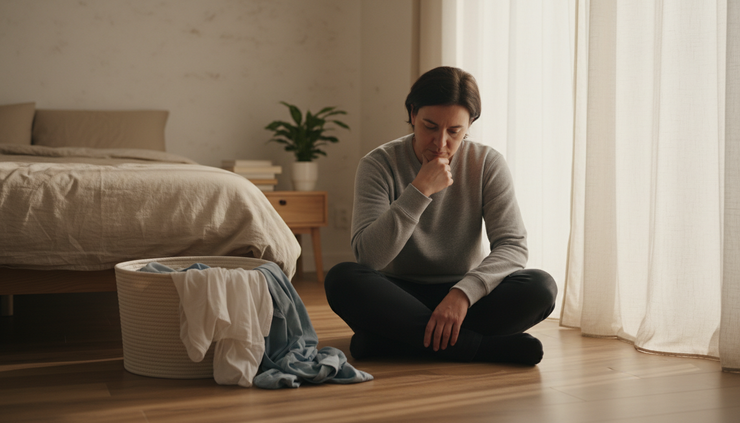
Your brain likes what is familiar
A lot of daily life runs on automatic behavior. That is a good thing most of the time.
Imagine having to consciously think through every tiny step involved in brushing your teeth, making coffee, driving a familiar route, locking the door, or washing a plate. You would be exhausted before breakfast.
Repetition helps the brain save effort. When you do something again and again in a similar context, your brain starts linking the behavior with cues around it. Those cues might be physical, emotional, social, or situational.
A cue could be:
Picking up your phone after hearing a notification
Feeling tension in a conversation
Sitting down on the couch after dinner
Opening your laptop and seeing a difficult task
Feeling lonely at night
Hearing a certain tone in someone’s voice
Over time, the cue can trigger the response almost before you have a chance to choose. That is useful when the automatic pattern supports your life. You do not need a motivational speech every time you put on a seatbelt.
It becomes harder when the automatic pattern protects you in the short term but hurts you in the long term.
Procrastination may reduce anxiety for a few minutes. Defensiveness may help you avoid feeling ashamed. Scrolling may soften boredom or loneliness. Overcommitting may prevent the discomfort of disappointing someone. Avoiding a hard conversation may keep the day calm.
The pattern works, in a narrow way. That is part of why it sticks.
The payoff is often immediate
Unhelpful patterns rarely survive for no reason. They usually give some kind of reward, relief, or protection, even if the cost comes later.
This is one reason change can feel so confusing. You may genuinely want the long-term outcome, but the old pattern offers an immediate benefit.
A few examples:
You want to stop procrastinating, but delaying the task gives instant relief from overwhelm.
You want to stop checking your phone so often, but it gives quick stimulation when you feel restless.
You want to stop arguing defensively, but defending yourself helps you escape the sting of criticism.
You want to keep a routine, but quitting after one imperfect day helps you avoid the discomfort of starting again.
You want deeper relationships, but withdrawing helps you feel safe when vulnerability gets too close.
The brain pays attention to relief. If a behavior lowers discomfort quickly, it can become attractive even when it creates bigger problems later.
That does not mean the pattern is wise. It means it has been reinforced.
A habit can be unhelpful and still make emotional sense.
That line matters. When you only judge the behavior, you miss the function it serves. When you understand the function, you gain more options.

Sometimes the pattern is bigger than the behavior
This is where curiosity becomes more useful than criticism.
The first question is often, “Why do I keep doing this?” That question can help, but it can also turn into self-attack. It can sound less like curiosity and more like a courtroom.
Try getting more specific.
What tends to happen right before the pattern appears?
Maybe you procrastinate when a task feels too large or unclear. Maybe you reach for your phone whenever there is a quiet moment. Maybe you get defensive when a conversation makes you feel misunderstood. Maybe you abandon a goal the second you feel like you are not doing it perfectly.
The behavior is the visible part. Underneath it, there may be cues, emotions, beliefs, body sensations, expectations, and old learning.
For example, “I always procrastinate” is broad and discouraging.
A more useful version sounds like this:
“When I sit down to work on something that has multiple unclear steps, I feel pressure in my chest, start thinking I will mess it up, then look for something easier to do.”
That gives you something to work with.
Or instead of “I always shut down in conflict,” you might notice:
“When someone sounds disappointed in me, I stop talking because I am trying not to say the wrong thing.”
Now the pattern becomes less mysterious. You are not just “bad at conflict.” Your system has learned a protective move.
Old patterns can feel like safety
Not every repeated pattern is just a habit. Some patterns are connected to stress, fear, shame, or past experiences.
A person who grew up around unpredictable reactions may become very alert to changes in tone. Someone who was criticized often may explain themselves before anyone asks. Someone who learned that needs were inconvenient may struggle to ask for help. Someone who was praised mainly for achievement may feel panicked when they are not productive.
These patterns may not feel good, but they can feel familiar. Familiar can get mistaken for safe.
That is one reason people sometimes repeat dynamics they consciously dislike. The brain is not always searching for what is healthy. Often, it searches for what it knows how to navigate.
This does not mean the past controls everything. It means old learning can shape what feels automatic now.
If a pattern is tied to trauma, intense anxiety, depression, disordered eating, self-harm, addiction, or ongoing emotional distress, support from a licensed mental health professional can make a real difference. This article is educational and not a substitute for therapy or medical care.
For everyday patterns, though, the same principle still applies: you cannot shame yourself into a new automatic response. Shame usually makes the old pattern stronger because it adds more discomfort, and the old pattern may be exactly how you have learned to escape discomfort.
Self-criticism often keeps the loop going
After repeating an unhelpful pattern, many people add a second layer of pain.
“I always do this.”
“I have no discipline.”
“What is wrong with me?”
“I should be over this by now.”
The problem is not only that these thoughts feel bad. The problem is that they often make change harder.
Self-criticism can push you into all-or-nothing thinking. If you missed one workout, the whole week is ruined. If you snapped once, you are a terrible partner. If you procrastinated again, you are hopeless. Once the story becomes that harsh, the old coping pattern may look like the fastest exit.
A kinder response is not the same as making excuses. It is a way to stay present long enough to learn.
Instead of “I failed again,” try:
“I repeated the pattern. What was the cue?”
Instead of “I know better, so I should do better,” try:
“I know better, and I need to practice the moment where this usually happens.”
That shift is small, but it changes the job. You are no longer trying to become a different person overnight. You are studying the pattern closely enough to interrupt it.

Change starts before the behavior
Most people focus on stopping the behavior itself. That makes sense because the behavior is the part causing trouble.
But by the time you are deep in the pattern, the momentum may already be strong. It is much easier to intervene earlier.
Think of a pattern as a chain:
Cue
Feeling or body response
Thought or story
Urge
Behavior
Short-term result
Long-term cost
If you only pay attention at step five, change feels like a battle of willpower. If you learn to notice steps one through four, you create more room.
Say the pattern is checking your phone late at night.
The chain might look like:
You get into bed.
The room feels quiet.
You feel lonely or unsettled.
A thought appears, “I will just check one thing.”
You scroll for forty minutes.
You feel distracted from the discomfort.
You sleep later and wake up tired.
The phone is part of the pattern, but the quiet room and unsettled feeling matter too.
A useful intervention might not be “Have more discipline.” It might be putting the phone across the room, creating a wind-down routine, playing calming audio, journaling for five minutes, or texting a friend earlier in the evening.
The goal is to meet the real need in a way that costs less.
Tiny interruptions count
People often expect change to feel dramatic. They want the epiphany, the clean break, the new identity.
Real change is often less cinematic. It may begin with a two-second pause.
That pause might sound like:
“Here is the pattern.”
“I am feeling the urge to disappear.”
“This is the moment where I usually say yes too quickly.”
“My body is getting tense.”
“I want relief.”
That kind of noticing is not small. It creates a gap between cue and response, and in that gap, you can practice something different.
The different response does not need to be perfect. In fact, it probably will not be.
If you usually avoid a task for three hours, opening the document for five minutes is a change. If you usually snap back, saying, “I need a minute,” is a change. If you usually say yes immediately, saying, “Let me check and get back to you,” is a change. If you usually quit after one imperfect day, starting again the next day is a change.
Small interruptions teach the brain that another route exists.
With repetition, that route becomes easier to find.
Make the new pattern easier to choose
A common mistake is trying to build a new response while leaving everything else the same. That can work for a while, but it asks a lot from willpower.
Your environment can help or hurt the change.
If you want to stop checking your phone first thing in the morning, charging it beside your pillow makes the old pattern easier. If you want to eat lunch instead of skipping it, having no simple food available makes the old pattern easier. If you want to respond calmly during hard conversations, having every serious talk when you are tired and hungry makes the old pattern easier.
You do not need a perfect system. You need less friction around the behavior you want and more friction around the behavior you are trying to change.
Try asking:
What makes the old pattern easy?
What makes the new response harder?
What cue could remind me to pause?
What support would help before I am already overwhelmed?
What is the smallest version of the new behavior?
A new pattern becomes more realistic when it fits into actual life.
You may repeat the pattern while changing it
This part can be discouraging, but it is also freeing: you can be changing and still repeat the old pattern.
Change is rarely a straight line. Automatic responses do not vanish just because you understand them. They weaken through awareness, practice, support, and repetition.
The old pattern may show up when you are tired, stressed, lonely, rushed, hungry, ashamed, or overloaded. That does not erase your progress. It gives you information.
A relapse into an old pattern can become a review instead of a verdict.
Ask yourself:
What was happening before it started?
What did the pattern help me avoid or reduce?
What did it cost me?
Where could I interrupt it next time?
What repair, reset, or support would help now?
This turns the moment into learning. You are not pretending the behavior is fine. You are refusing to treat one repetition as proof that change is impossible.

The goal is a different relationship with the pattern
Repeating an unhelpful pattern does not mean you do not care. It does not mean insight has failed. It usually means the pattern has been practiced, reinforced, and connected to cues that still have power.
The most useful question is not “Why am I like this?”
A better question is, “What is this pattern doing for me, and what could I practice instead?”
That question keeps you honest without turning you against yourself.
Start with one pattern. Not your whole personality. Not every habit at once. Pick one loop you can observe this week. Notice the cue. Name the feeling. Look for the short-term payoff. Choose one tiny interruption.
You are not trying to become a person who never falls into old patterns. You are becoming someone who can recognize them sooner, recover faster, and practice a response that fits the life you actually want.



Comments